
The Story Behind Artisan-Made Sewing Tools: Part 1

A sewing tool can be small, quiet, and easy to overlook.
But sometimes, the smallest objects are the ones that carry the deepest history.
At Itoma, we are drawn to tools that do more than simply serve a function. We love tools that feel carefully considered, beautifully made, and connected to the hands that shaped them. In Japan, many everyday craft tools are still made through local traditions, regional techniques, and long-practiced skills that continue to live on in modern objects.
This month, we wanted to share a few sewing tools whose stories are just as beautiful as their forms. Each one is practical, but each one also carries something more: the character of a place, the precision of a craft, and the quiet pleasure of using something made with care.

Seki Mini Scissors
A tiny tool shaped by one of Japan’s great cutlery traditions
At first glance, the Seki Mini Scissors feel almost playful. They are remarkably small, charming in appearance, and easy to slip into a pouch or sewing kit. But behind their size is a serious history of craftsmanship.
These scissors are made by Hasegawa Cutlery in Seki City, Gifu Prefecture, one of Japan’s most well-known cutlery-making towns. Established in 1933, the company has built its reputation on the kind of sharpness and reliability that only comes from generations of accumulated skill.

The story of these scissors began with a simple and curious question:
How small can the very best scissors be?
That playful challenge led to the creation of a tool that is tiny, but still impressively sharp and practical.
With a light pinch, they cut thread, cloth, and other thin materials cleanly and smoothly. They are the kind of tool that feels surprisingly satisfying to use, especially because their scale and performance seem almost at odds with one another.
The details around them are just as thoughtful. Each pair comes with a genuine leather case for portability and a silk tassel made by MARIMO, a tassel studio in Chikugo, Fukuoka, known for delicate handwork and traditional techniques. Even this small finishing detail carries its own regional craft story.


What makes these scissors so special is not only their usefulness, but the way they bring together precision, portability, and a sense of delight. They are a practical little object, but they also feel like a reminder that even a tool this small can be made beautifully.
→ Check Seki Mini Scissors

Tombo-dama Sewing Pins
Tiny sewing pins carrying the beauty of handmade glass
Some tools are purely functional. Others quietly bring joy before you even begin using them.
Cohana’s Tombo-dama Sewing Pins belong to the second kind.
These pins are topped with small handmade glass beads created using the traditional Japanese tombo-dama technique. The name tombo-dama means “dragonfly’s eye,” inspired by the mysterious beauty of the glass beads, whose patterns and depth of color resemble something luminous and alive.

The pins use millefiori glass, a technique whose name means “a thousand flowers” in Italian. Floral patterns are built inside the glass itself by combining colored glass bars, then heating and stretching them while preserving the design within. Each bead is then carefully shaped and attached by hand.
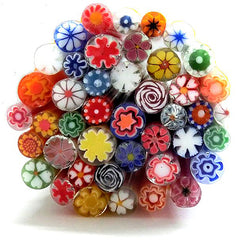
These glass elements are made by Kinari Glassworks in Osaka, where artisans work patiently with flame and glass to produce pieces that are delicate, expressive, and never exactly the same. Because each bead is handmade, every pin has its own character. No two are completely identical.

The pins themselves are produced in Hiroshima, a place with a long history of fine needle-making. This means the beauty of the bead is paired with the reliability of a well-made sewing pin: supple, durable, and smooth to use on fabric.
What we love about these pins is the way they transform something ordinary into something quietly memorable. They are still sewing pins, of course. They still serve a practical purpose. But they also feel like tiny crafted objects, each one holding a little color, care, and individuality.
→ Check Tombo-dama Sewing Pins

Small Scissors with Lacquered Handles
Where sharpness meets traditional lacquer and gold maki-e
These small scissors are made for detailed work such as embroidery, quilting, and fine sewing, but what first catches the eye is often the handle.
Decorated with traditional Japanese lacquer and gold maki-e lines, they carry a sense of warmth and refinement that feels quite different from ordinary sewing scissors. They are elegant, but not merely decorative. Their beauty is deeply tied to their making.
The blades are produced by Hasegawa Cutlery in Seki, Gifu, where master craftsmen forge and hand-fit the scissors to create a smooth, precise cutting experience. The final finishing steps, including Koba-biki and Tip Shaving, require trained hands and sensitive judgment. These are not just manufacturing steps, but careful acts of adjustment that affect how the scissors open, close, and cut.

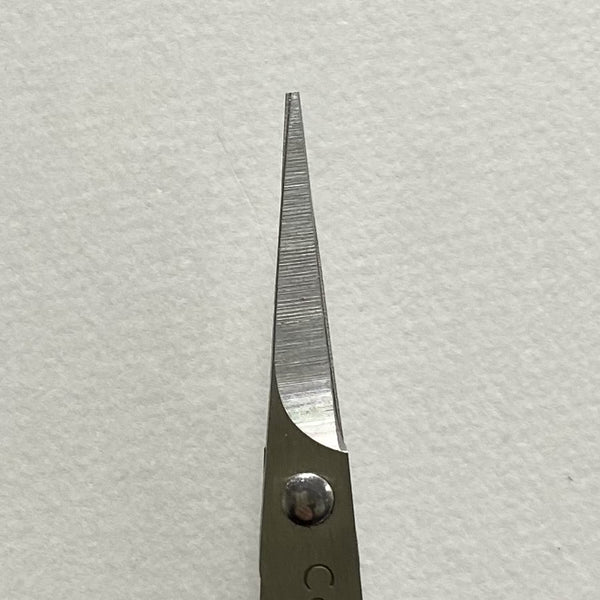
Because the tapered tips are finely finished, they are especially suitable for detailed handiwork where control matters.
The handles are lacquered by Ehara Lacquer Works in Nagoya, Aichi Prefecture, a workshop founded in 1970. Known for lacquer work including Buddhist altars and traditional objects, they bring this same skill and material sensibility to these scissors. The result is a handle that feels both functional and quietly luxurious.


The scissors are available in finishes such as Tamenuri and Shunuri, each with its own character. Tamenuri is a deep brown tone created by layering transparent lacquer over vermilion, giving the surface a rich sense of depth. Shunuri, by contrast, produces a vibrant vermillion red, a color long associated with celebration across Asia. Both finishes are accented with delicate Gold Makie Lines, adding a subtle brightness and a sense of ceremony to an everyday tool.

This kind of lacquerwork is rooted in traditions normally associated with cherished and long-lasting objects.
Each pair comes with a leather sheath, a gilt tassel, and a cloth that can also be used to care for the lacquered surface. With proper maintenance, they are made to stay with you for a very long time.

These scissors feel special because they bring together multiple forms of Japanese craftsmanship in one object: cutlery-making, lacquerwork, finishing, and material care. They remind us that a useful tool does not have to be plain, and that beauty and function can live comfortably together.
→ Check Small Scissors with Lacquered Handles (Tamenuri)
→ Check Small Scissors with Lacquered Handles (Shunuri)
More Than Tools
When we look at artisan-made sewing tools, what we see is more than utility.
We see places.
We see materials.
We see the hands of makers whose work is often quiet, but deeply skilled.
A good tool can change the feeling of making. It can make a process smoother, more enjoyable, more personal. And when that tool also carries a story, it becomes something more lasting than a simple object in a sewing box.
At Itoma, we love sharing tools like these because they reflect so much of what we value: thoughtful design, regional craftsmanship, and the quiet richness of things made well.
We hope these stories help you see these tools a little differently, not just as supplies, but as small companions in the making process.
At Itoma, many of the tools we carry come with their own quiet story, so this is the first of a small series. We look forward to sharing more artisan-made pieces with you soon.
— Itoma


